SCIENTIFIC LABORATORIES

Ғылыми зертханалар

loading...
Description
Staff
Projects
Publications
Equipment

The Research laboratory "A.S. Akhmetov Nanoengineering research methods" was established in 2007. The total area of the laboratory is 902 m2.

By the decision of the Academic Council of the University, the Research laboratory "Nanoengineering Research Methods" was named after Ashimzhan Suleimenovich Akhmetov, Doctor of Technical Sciences, Professor, academician, Rector of M.Kh. Dulaty Taraz State University in 2008-2012, who made a significant contribution to the development of laboratory material and technical base (10/30/2012, Protocol No. 2).

The purpose of the laboratory is to organize and conduct theoretical and experimental research on the creation of advanced technologies in the field of food engineering, construction production and the oil and gas industry based on the effective use of the laboratory's logistical and human resources.

The main tasks of the laboratory:

- assistance in the implementation of scientific and scientific-technical programs and projects, including fundamental and applied projects in priority areas of scientific and technological development, as well as assistance in the preparation of master's and doctoral theses in the relevant field of scientific research;

- dissemination of new knowledge and technologies;

- involvement of students, undergraduates, doctoral students and young scientists in research work;

- conducting joint scientific research with domestic and foreign universities and research centers;

- creating conditions for the commercialization of the results of scientific and technical activities in order to attract investments in the high-tech sector;

- promoting the development of public-private partnership mechanisms;

- efficient use of equipment to solve scientific and technical problems;

- contribution to the development of international scientific and technical cooperation.

Scientific research in the laboratory is carried out on an initiative basis in such scientific areas as geotechnics, food engineering, and the oil and gas industry, within the framework of the following 3 projects:

1) Development of advanced geotechnical structures and technologies for their preparation for construction;

2) Development of technology for bread, bakery and flour confectionery products for functional purposes based on natural fortifiers;

3) Investigation of the properties of grouting materials and drilling fluids for oil wells.
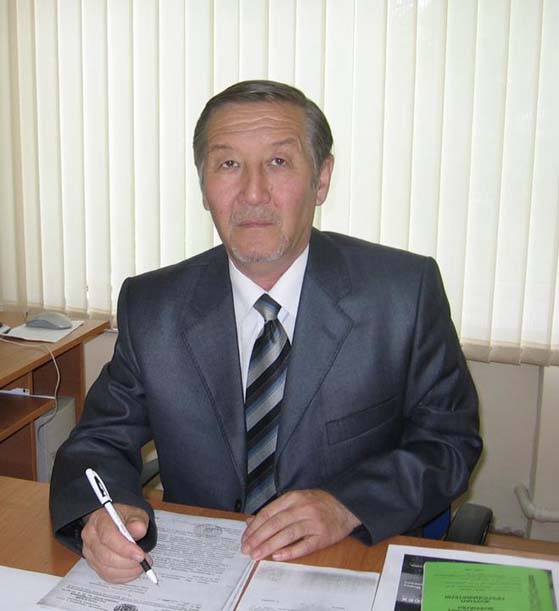
1) Within the framework of the project "Development of progressive geotechnical structures and their manufacturing technologies for construction" (supervisor: Isabai Bekbasarov, Doctor of Technical Sciences), the following results were obtained:

- experimental models of piles (10 pcs.) and stamps (10 pcs.) of various sizes were made (by 3D printing), static tests of models of piles and stamps, as well as models of tape pile foundations in a soil tray were organized and conducted to assess their interaction with soils;

- the peculiarities of the structures' operation under the action of vertical loads have been revealed and patterns of resistance changes have been established depending on the size of the stamps, soil properties and trench forming conditions.;

- theoretical problems have been formulated and solved to determine soil parameters in various humidity conditions and conditions of interaction with foundations;

- methods have been developed for determining the amount of water required for soaking dry and semi-dry soils during impact compaction, the size of the compacted soil zone under the stamp when stamping hard material into the bottom of the trench, the amount of dry soil to be added to the water-saturated soil when stamping the trench.


2) According to the project "Development of technology for cooking Kazakh national bread of increased nutritional value" (supervisor: Asel Umirbekova, Master's degree), the following results were achieved:

- in order to improve the recipe of the national bread, experimental tests were conducted with the addition of fat in various quantities.;

- experimental samples of national bread were baked with the addition of chicken fat, and their organoleptic parameters were evaluated;

- in order to increase the nutritional value of bread, recipes have been developed with the addition of dried fruit samples (melon paste, watermelon paste, apricot);

- prototypes of granola trail mix products have been developed based on combined mixtures of vegetable raw materials, vegetable and fruit extracts.

3) According to the project "Investigation of the properties of grouting materials and drilling fluids for oil wells" (supervisor: Arman Kabdushev), the following works were performed:

- modified grouting mixtures for fixing casing strings of oil and gas wells have been investigated;

- grouting solutions with differential properties have been tested under the action of static loads;

- compositions of complexly modified grouting materials have been developed to improve the quality of well fasteners;

- the composition of buffer fluids has been formed to increase the fixation of the wellhead

Since 2025, scientists and specialists of the laboratory in the geotechnical field have been implementing 2 grant projects.  These include:

1) Project AR25795533 "Creation of polycomponent soil materials, optimization of their compositions and development of methods for predicting their parameters for the construction of bulk dams" (budget of 30.0 million tenge). The head is Kuralay Suyenshbaeva, scientific consultant is Isabai Bekbasarov. The project is being implemented within the framework of the Zhas Galim 2025-2027 competition. In 2025, laboratory studies of two-component soil mixtures with different proportions of their ratios were carried out within the framework of the project. Experiments have been conducted to evaluate the physical parameters of soil samples. The following indicators were determined: composition of soil particles, initial humidity, humidity at the rolling boundary, humidity at the yield boundary, and density.

2) Project AR26197175 "Development of technology for the construction of belt pile foundations with grillings in stamped trenches" (budget of 120,0 million tenge). Project manager Isabai Bekbasarov. The project is being implemented as part of a general grant competition for 2025-2027. In 2025, as part of the project, laboratory experiments were carried out on impact driving of pile models, the sizes of compacted soil zones from the introduction of piles were determined, and optimal distances between piles were established. The energy intensity of sinking piles during driving has been determined, and the bearing capacity in clay and sandy soils has been established.

In 2025, the laboratory performed experiments with polymer concrete samples in laboratory conditions as part of the implementation of the targeted program financing megagrant under the program "BR24992867 - Development of resource-saving technologies for the development and management of water management and processing industry in Kazakhstan, creation of an innovative engineering center". The experiments included the production of control and experimental concrete samples with dimensions of 100×100×100 cm (fibrocrete, polymer-cement concrete, polymer-cement fibrocrete and concrete polymer), testing of concrete under the action of static compressive loads and dynamic impacts, water saturation of experimental concrete samples.

Articles published in 2025 in Scopus journals:

1) Atenov, Y.; Bekbasarov, I.; Shanshabayev, N. Energy Intensity and Uplift Load Resistance of Novel Hybrid Pile, Driven with Additional Compaction: Comparative Field Study. Buildings 2025, 15, 487. https://doi.org/10.3390/buildings15030487  

2) Atenov, Y.; Bekbasarov, I.; Shanshabayev, N. Investigation of Strength of Polymer-Modified Fiber-Reinforced Concrete Under Water Saturation. Buildings 2025, 15, 4407. https://doi.org/10.3390/buildings15244407 

            3) Bekbasarov, I., Suienshbayeva, K., Atenov, Y., & Shanshabayev, N.  The Influence of the Fine Earth Composition of the Soil Mixture on the Parameters of Its Filtration, Moisture Content, and Density. Civil Engineering Journal 2025, 11(12), 5144–5166. https://doi.org/10.28991/CEJ-2025-011-12-013

Articles published in 2025 in Committee journals:

1) Бекбасаров, И.И. Ростверк астындағы траншеяларды штамптау кезінде қадалар арасындағы тығыздалған топырақ аймағының өлшемдерін анықтау әдістері   / И.И. Бекбасаров, Е.И. Атенов, Н.А. Шаншабаев // Механика және технологиялар / Ғылыми журнал. – 2025. – No4(90). – Б.181-194. https://doi.org/10.55956/AAIY2161   

2) Умирбекова, А.С. Нан өндіру технологиясында өнген жасымық ұнын қолдануды зерттеу / А.С.  Умирбекова, А.Б.  Мынбаева, И.Н.  Сметанская, А.С. Боранкулова, А.Б. Саршаева, А.Б.  Нұрмахан // Механика және технологиялар / Ғылыми журнал. – 2025. –No3(89). – Б.107-115. https://doi.org/10.55956/GABL8998  

3) Бекбасаров, И.И. Результаты лабораторных исследований по изучению некоторых параметров фильтрации воды через образцы мелкозернистого компонента крупнообломочного грунта / И.И.  Бекбасаров, К.Т.  Суйеншбаева, Е.А. Атенов, Н.А. Шаншабаев // Механика и технологии / Научный журнал. – 2025. – No3(89). – С.309-318. https://doi.org/10.55956/BVXN7131  

4) Бекбасаров, И.И. Метод определения количества воды для увлажнения грунта при выштамповывании траншеи под ростверк между сваями / И.И. Бекбасаров, Е.И. Атенов, Н.А. Шаншабаев // Механика и технологии / Научный журнал. – 2025. – No3(89). – С.330-341. https://doi.org/10.55956/NMKV2583

5) Умирбекова, А.С. Богарная-56 сортынан алынған бидай ұнын наубайханада қолдану перспективасы / А.С. Умирбекова, А.С. Боранкулова, А.К. Садибаев, С.А. Орынбаев, М.Е. Ержанова, Б.Е. Солтыбаева, Л.Ж. Алашбаева // Механика және технологиялар / Ғылыми журнал. – 2025. – No2(88). – Б.82-92. https://doi.org/10.55956/PAUA6927  

6) Бекбасаров, И.И. Об обеспечении сейсмической безопасности г. Тараза / И.И. Бекбасаров, Е.И. Атенов, Н.А. Шаншабаев // Механика и технологии / Научный журнал. –2025. – No1(87). – С.231-240. https://doi.org/10.55956/RITR8974  

7) Маликтаева, П.М. Ашымықтың қышқылдық санын анықтау [Мәтін] / П.М. Маликтаева, К.Ш. Саржанова, А.Б. Мынбаева, Ш.Д. Умирбаева //Механика және технологиялар / Ғылыми журнал. – 2025. – №1(87). – Б.74-79. https://doi.org/10.55956/EJVR4716  

8) Боранкулова, А.С. Жамбыл облысында өсірілген отандық сұрыпты бидайлардың физика-химиялық құрамын және технологиялық қасиеттерін зерттеу [Мәтін] / А.С. Боранкулова, А.С. Умирбекова, А.К. Садыбаев, Л.Ж. Алашбаева, Б.Е. Солтыбаева, М.Е. Ержанова //Механика және технологиялар / Ғылыми журнал. – 2025. – №1(87). – Б.88-96. https://doi.org/10.55956/SNMB4114

9) Мынбаева, А.Б. «Талқан-Үлпек» ұлттық өнімінің рецептурасын оңтайландыру [Мәтін] / А.Б. Мынбаева, А.К. Садибаев, П.М. Маликтаева, А.С. Умирбекова //Механика және технологиялар / Ғылыми журнал. – 2025. – №1(87). – Б.121-128. https://doi.org/10.55956/NTHZ7458  

10) Байтемиров, М.Н. Влияние жесткости подземной части здания на деформируемость основания на примере строящихся зданий школ в с. Аксу и г. Шымкент Туркестанской области [Текст] / М.Н. Байтемиров, И.И. Бекбасаров, С.Ш. Егембердиева, Б.Ж. Кушкимбаева, Е.И. Атенов, Н.А. Шаншабаев // Механика и технологии / Научный журнал. – 2025. – №1(87). – С.219-230. https://doi.org/10.55956/NUSO8769  

11) Кембаев А.Р., Бимбетова Г.Ж., Кабдушев А.А., Надиров К.С., Отарбаев Н.Ш. Получение тампонажных растворов для крепления нефтегазовых скважин // Нефть и газ. – 2025. - №1 (145). - С.222-235;

12) Development of the composition of lightweight cement slurry using microspheres and microsilica // SOCAR Proceedings. No.2 (2025) 040-047 Drilling & Completion. http://proceedings.socar.az

13) Кембаев А.Р., Бимбетова Г.Ж., Отарбаев Н.Ш., Бекенов Р.М. Шегендеу бағаналарын бекіту үшін тампонаждық қоспалардың жаңа құрамын алу // Научно-технический и производственный Горный журнал Казахстана. – 2025. - №8 (244). – С.63-70.

Photo

Equipment name

Brand/model

Main technical characteristics

Types of work

Quantity

Country of origin

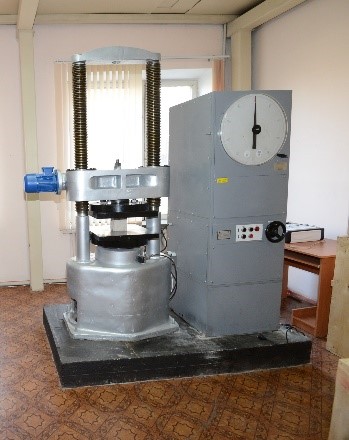
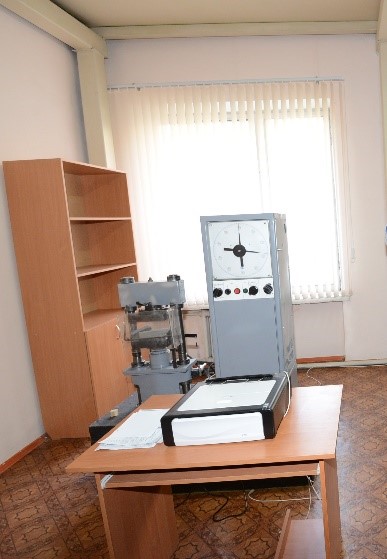
Hydraulic press

P-125

Maximum created load: 1250 kN; Stroke of the hydraulic piston: 50 mm; Distance between columns: 470 mm; Dimensions of compression plates: 440×440 mm

Determination of compressive strength of building materials

1

Russia

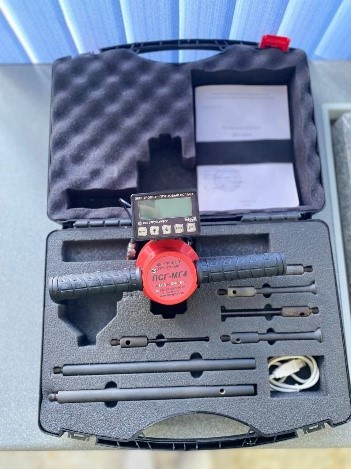
Ground penetrometer

PSG-MG4

Measuring range of penetration force: 100-950 N; Range of penetration resistance: 0.5-7.5 (50-750) MPa (N/cm2); Diameter of tips: 22,0; 16,0; 11,3; 8,0; 6,0 mm.             

Determination of soil density

1

Russia

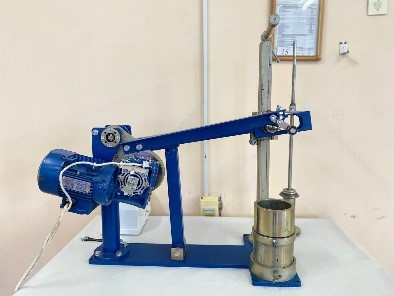
Standard soil compaction device

PSU-A

Dimensions of a split worker:

- Height 127.4 mm; - Diameter 100 mm;

- Capacity 1000 cm3; Sealer parameters:

- The weight of the kettlebell is 2.5 kg;

Weight drop height 300 mm; Stroke rate per minute 9.


Determination of maximum ground density

1

Russia

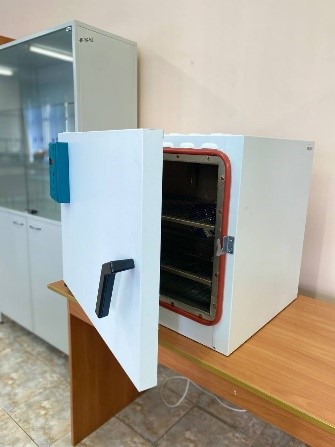
Drying cabinet

SHS-80-01 SPU

Volume: 80 liters; Operating temperature range: 5-200 ° C; Accuracy of temperature maintenance in the working chamber in steady state, not worse: ± 3 ° C; Dimensions of the working chamber, not less: width × depth × height: 560x390x370 mm

Dehydration of samples

1

Russia

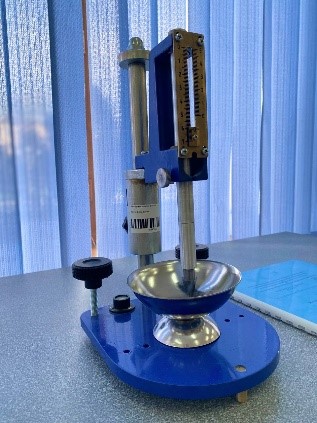
Vasilyev balancing cone tripod

SHPV

Weight of the movable part of the device: 76 ±2 g; Angle at the tip of the cone: 30±1 degree; Inner diameter of the cutting ring: 50.5±0.1 mm; Height of the cutting ring: 25±0.1 mm

Determination of the yield strength of clay soils

1

Russia

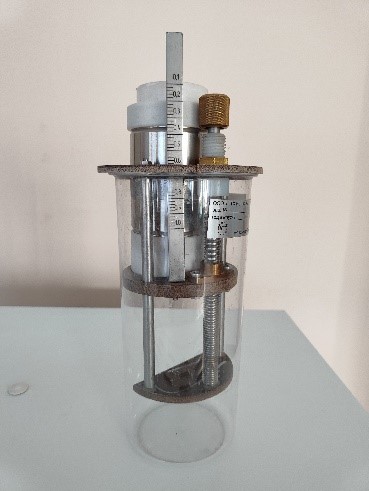
Cylinder Device  

CF-00M

CF-00M

- inner diameter 56.5 mm;

 - height of 100 mm;

Glass balloon  

- volume 140 cm3;

- height 110 mm

Determination of the filtration coefficient of sandy soils

1

Russia

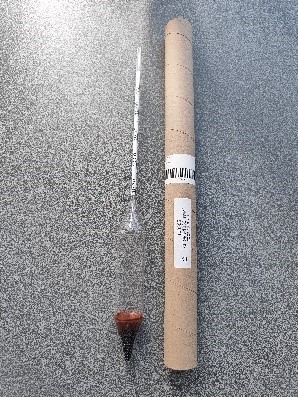
Hydrometer ground

AG-995-1030

Density measurement range: 995-1030 kg/m3; Hydrometer scale division price: 1.0 kg/m3; Height: 405 mm; Largest diameter: 32 mm

Determination of soil density

1

Russia


Machine (press) for compression testing

IP-100

Maximum load generated: 100 kN; Hydraulic piston stroke: 100 mm; Column spacing: 230 mm; Compression plate dimensions: 210×210 mm

Determination of compressive strength of building materials

1

Russia

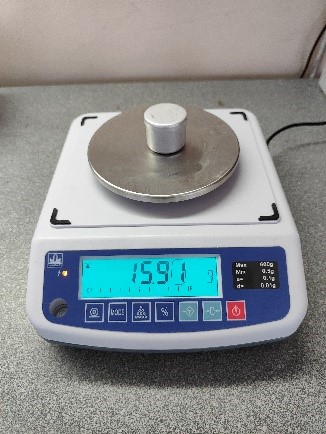
Laboratory electronic scales

NPV-600

Maximum weighing limit (NPV or Max): 600 g; Discreteness (division price) (d): 0.01 g; Accuracy class: High (II); Diameter of the scale bowl: 120 mm; Calibration: external

Measurement of the mass of a substance

1

Russia

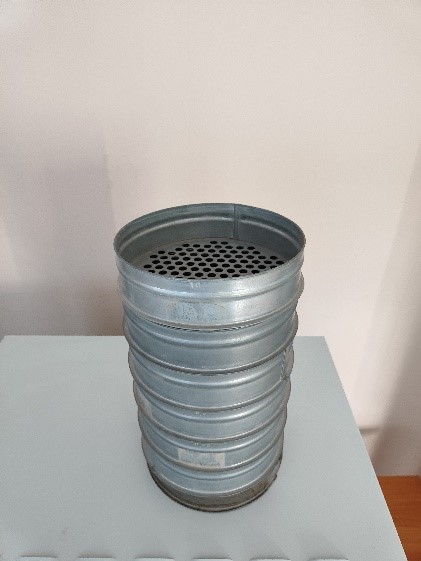
A set of sieves with a mesh size of 0.1-10.0 mm

-

The mesh size: 0,1; 0,25; 0,5; 1,0; 2,0; 5,0; 10,0 mm; Type of screening element: mesh; Shell size: 300 mm; Shell height: 50 mm

Determination of the fractional composition of soils

1

Russia

Hot pressing press

Cito Press-10

Press force: 50-250 bar in 25 bar increments; Temperature: 80-180 ° C in 5 °C increments; Heating/cooling time: 1-15 min in 0.5 min increments

Tableting with a blank diameter of 25 mm

1

Denmark

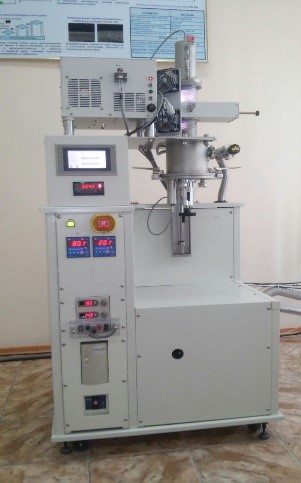
Carbon nanotube synthesis plant

CN-CVD-100

Synthesis method: plasma epitaxial deposition from the gas phase; Gases used: CH4, H2, N2; Temperature in the working chamber: 600 0C; Energy source: microwave generator; Substrate type: metal alloy Fe, Ni, Co

Synthesis of carbon nanotubes from the gas phase

1

Japan

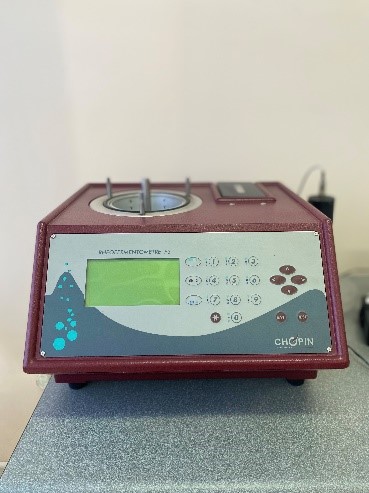
A device for determining the enzymatic properties of flour

RHEOFERMENTOMETER F3, CHOPIN

Test duration: from 30 minutes to 24 hours; device memory: storage of up to 8 methods, up to 8 test results; interface: RS 422, RS 232 Determination of the amount of CO2 in the dough

Measurement of the dough volume

1

France

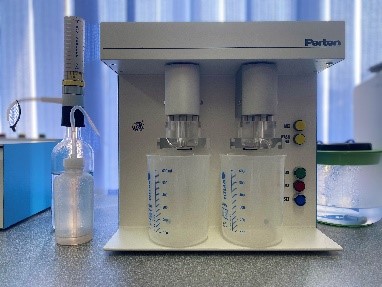
Grain gluten detection system

GLUTOMATIC, PERTEN

Power requirements: 115/230 V, 50/60 Hz

Power consumption: Glutomatic 2000 - 250 VA

Touch screen (GM 2000): 7 inches, capacitive

Dimensions: Glutomatic 2000: 378x353x288 mm, Ambient temperature: 5-35°C

Humidity: 35-80% relative humidity, non-condensing

Measurement of grain gluten quantity and quality

1

Sweden

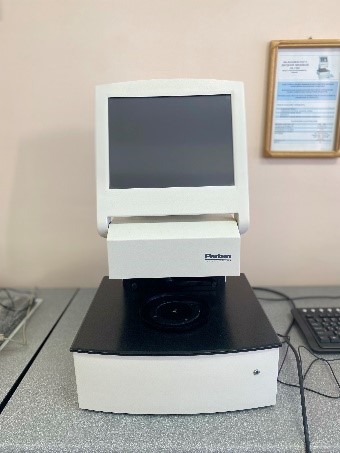
Infrared analyzer

Perten DA 7200

Analysis time: 6 seconds

Sample size: From a few grains to 380 ml

Products: Grain, powder, suspensions, pastes and other products

Parameters: Mass fraction of moisture, protein, oil, starch, fiber, and others.

Type of analysis: non-contact, top-down, rotating sample cup

Analysis area: Standard sample cup 108 cm2

Measuring protein, fiber, starch, sugar, moisture

1

Sweden

A set of automated test complex

ASIS

Power of force action: 10, 30, 50 kN; Control method: electropneumatic, electromechanical; Force action along various trajectories: steps with stress control (minimum step 0.0125 MPa); steps with position control (minimum step 0.01 mm); continuously, with a given axial deformation 0.0001 – 10 mm/min. The ability to carry out tests in accordance with GOST.

Determination of deformation and strength characteristics of soils (shear, uniaxial and triaxial compression tests)

1

Russia